


A glance across the pass, a raised hand, a quick point toward the corner, the way a chef clears a cutting board, or the way a plate is held out can all carry information. In busy kitchens, these small signals help people understand what is happening around them without stopping the entire workflow.
The real skill is not simply knowing what a gesture means. It is learning to read the room, recognize patterns, and communicate through timing, position, movement, and shared habits.
The Language of the Kitchen: How Chefs Communicate Without Saying a Word
Walk into a professional kitchen during service and you will notice something immediately: everyone seems to be moving at the same time, yet the work does not feel completely random.
Chefs are constantly reading each other. Someone steps aside before another person reaches the stove. A hand points toward an ingredient. A cook raises a finger to signal that a pan is hot. A plate is placed in a particular position because everyone already understands what happens next.
This is the nonverbal side of kitchen communication. It is built from repetition, shared terminology, body language, spatial awareness, and trust.
Why Nonverbal Communication Matters in a Busy Kitchen
Professional kitchens are environments where several tasks happen simultaneously. Multiple cooks may be handling knives, pans, ovens, hot liquids, plates, and ingredients within a small working space.
In that environment, every unnecessary interruption matters. A chef who has to stop, turn around, and explain every small movement can slow down the people around them.
Nonverbal signals help communicate simple information while keeping attention on the food.
- Awareness — body position can show where someone is moving and what they are handling.
- Timing — gestures can signal that an action is happening now or is about to happen.
- Safety — movement and positioning can warn others about hot, sharp, or crowded areas.
- Coordination — shared visual cues help several people work on the same service without constantly stopping.
- Rhythm — repeated signals create a predictable flow that experienced teams begin to understand almost automatically.
The Eyes Are Part of the Kitchen Vocabulary
Eye contact is one of the simplest forms of nonverbal communication in a kitchen. A chef may look at a cook, glance at a pan, and then look back without saying anything.
In a team that has worked together for a while, that sequence can communicate a surprising amount: attention is needed, something is nearly ready, or a particular task should happen next.
A Quick Check
A short glance can confirm that another cook has noticed a change, a plate, a ticket, or a developing problem.
A Shared Focus
Looking at the same pan, board, plate, or ingredient directs attention without needing a long explanation.
A Timing Signal
A look exchanged just before a finishing step can tell another team member to prepare for the next movement.
A Confirmation
A nod or brief eye contact can confirm that information has been understood and work can continue.
Hands Can Speak Too
Kitchen hands are rarely still. They point, wave, signal, steady, move, and clear. In a fast service, these movements often become part of the team's shared visual vocabulary.
A simple pointing gesture can direct another cook toward an ingredient or station. A raised hand can momentarily attract attention. A palm can signal a pause or caution. The exact meaning depends on the kitchen and the habits the team has developed.
That is why experienced kitchen teams often seem to communicate effortlessly. The signals are familiar because they have been repeated hundreds of times.
Body Position Is a Safety Signal
In a crowded kitchen, where someone is standing can communicate nearly as much as what they are saying.
A cook entering a narrow passage changes the movement of everyone around them. Someone leaning over a hot pan occupies a different kind of space than someone working at a cold prep station.
Turning the Body
Turning or shifting position can make movement predictable and reduce the chance of colliding with another person.
Making Space
Stepping aside before another cook reaches a station is a quiet way of saying, “I know you need this space.”
Protecting the Work Area
Keeping a clear working zone tells others where the active task is taking place.
Moving With Awareness
Controlled movement gives nearby cooks visual information before words are even necessary.
The Countertop Itself Can Communicate
Communication does not always come from people. Sometimes the state of a workstation says everything another chef needs to know.
A cleared cutting board can mean the previous preparation is finished. Ingredients arranged in order can signal the sequence of the next task. A tool placed beside a pan can indicate that a finishing step is approaching.
This is why organization is more than aesthetics. In a professional kitchen, the arrangement of tools and ingredients can become part of the team's shared language.
Clear Board
A clean work surface signals that the station is ready for the next job.
Tools in Sequence
Placing the required tools in working order reduces hesitation and makes the process easier to read.
Ingredients Grouped
Grouping ingredients by task helps communicate what belongs together and what should happen next.
Consistent Placement
When tools return to the same location every time, everyone working around the station becomes more predictable.
Your Gear Can Communicate Your Workflow Too
The idea of silent communication extends beyond the counter. The way a chef carries and organizes personal equipment can reveal how they approach preparation: what they consider essential, how quickly they need access, and how much equipment they expect to move between stations.
A useful example is the Trento Leather Chef Knife Backpack Saddle (BP-189). It is not the “communication” itself; rather, it supports the organized system that makes communication and movement easier. When knives, tools, and personal essentials have predictable places, the chef can arrive at a kitchen with a kit that already has an internal order.
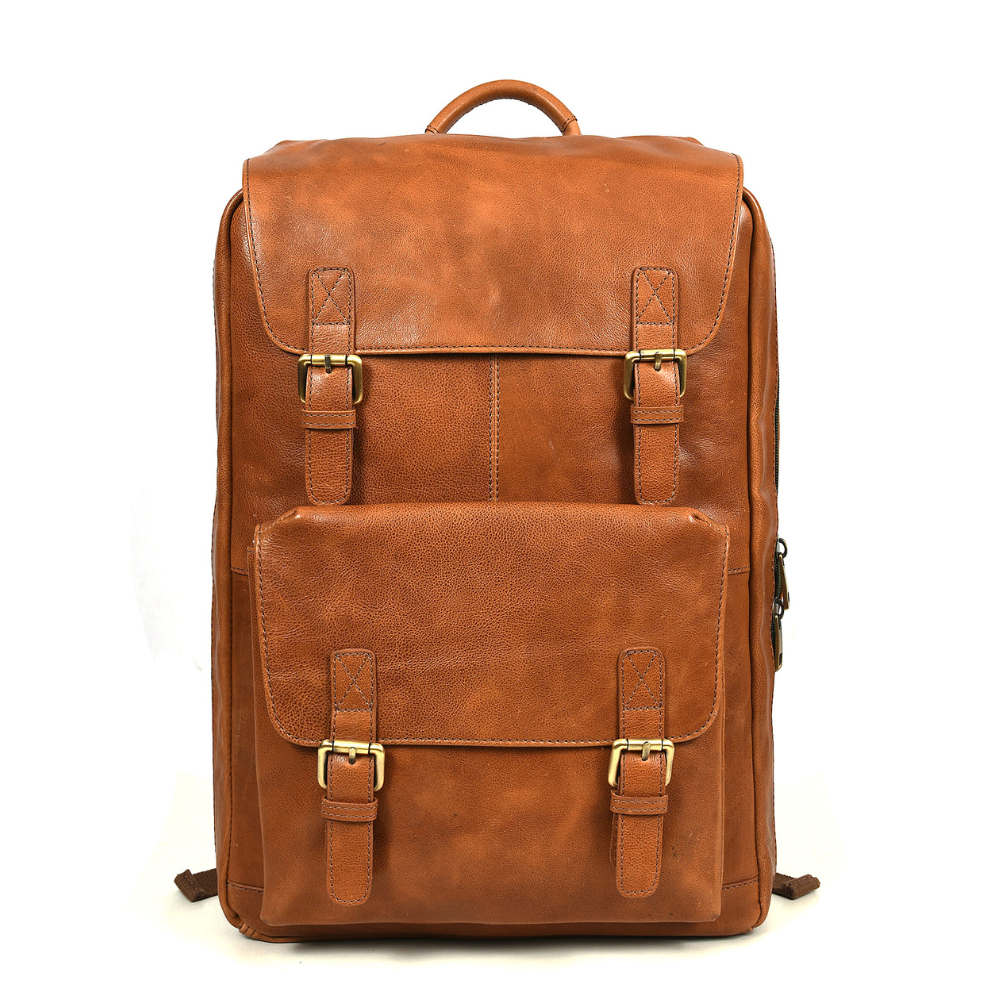
Trento Leather Chef Knife Backpack Saddle (BP-189)
Built as a portable chef equipment system, this leather backpack is designed around the practical needs of chefs, cooks, and culinary students who carry multiple tools between locations.
- 20+ knife and tool capacity for a broader personal culinary kit.
- Accommodates knives and equipment up to 16 inches.
- Made from 100% genuine leather with reinforced double stitching.
- Includes dedicated space for a honing rod, pens, and accessories.
- Larger compartments can hold spices, tablet, phone, charger, business cards, and other kitchen essentials.
- Adjustable backpack straps make the kit practical to carry between kitchens.
The interesting part is not simply how much equipment the backpack can hold. It is the system behind it. When every tool has a defined place before a shift begins, the chef spends less time searching and more time reading the work in front of them.
The Difference Between Noise and Communication
A loud kitchen is not necessarily a well-coordinated kitchen. Sound can be constant, but communication is about whether useful information reaches the right person at the right moment.
The same is true for nonverbal signals. A hundred random gestures create confusion. A small set of clear, repeated signals creates structure.
| Signal | What It Can Communicate | Why It Helps |
|---|---|---|
| Eye Contact | Attention, confirmation, shared focus | Quickly directs awareness without stopping the workflow |
| Pointing | Location of an ingredient, tool, plate, or task | Reduces the need for a long verbal explanation |
| Nod | Acknowledgement or confirmation | Confirms that information has been received |
| Stepping Aside | Awareness of another person's movement | Keeps narrow work areas flowing safely |
| Hand Signal | Attention, timing, pause, or direction | Creates a fast visual cue when the environment is busy |
| Station Setup | Order of tasks and readiness | Makes the workflow easier for the team to read |
Reading the Pass Without a Conversation
The pass is one of the clearest places to observe kitchen communication. Plates arrive, move, wait, and leave. A chef watching the pass can learn a lot from position alone.
The direction a plate is placed, the order of plates waiting to leave, the way garnishes are arranged, and the space kept open for finished dishes can all create a visual rhythm.
Experienced teams do not need to rediscover that rhythm every night. They know the pattern, so the visual information becomes almost automatic.
Tools Have a Language of Their Own
Chefs often develop personal relationships with the tools they use every day. A particular knife may always sit on one side of the board. Tongs may stay beside a pan. A towel may remain folded in a familiar position.
These habits create tiny visual references. Another cook who has learned that setup can understand what is happening simply by looking at the station.
- Knife position can indicate where the active cutting work is happening.
- Pan placement can reveal which cooking surface is being used and how the cook is moving around it.
- Ingredient layout can show preparation order and what still needs attention.
- Tool placement can make the next action visually obvious.
- Station reset can signal that a task is complete and the workspace is ready again.
Why Consistency Makes Silent Communication Possible
Nonverbal communication only becomes powerful when it is consistent. The same gesture, position, or routine needs to mean roughly the same thing each time for the team to rely on it.
That is why kitchen culture matters. Every restaurant can develop its own habits, and every team learns the subtle patterns of its own workspace.
Same Places
Tools and ingredients return to predictable positions so people can find them without searching.
Same Signals
Shared gestures become useful because everyone on the team understands their intended meaning.
Same Rhythm
Repeated workflows make movement easier to anticipate during a busy service.
Same Reset
Returning stations and equipment to a known state creates a clean starting point for the next task.
How New Cooks Learn the Language
A new cook does not automatically know the visual language of a kitchen. Much of it is learned by observing and repeating.
Watching where experienced chefs stand, how they move around equipment, where they place their knives, and how they react to a sudden change gives a new cook information that is not always written in a training manual.
Watch First
Observe how people move through the space before trying to copy the speed.
Learn the Local Signals
Understand which gestures and visual cues are actually used by that particular team.
Copy the Organization
Learn where tools and ingredients belong so your station becomes predictable to everyone around you.
Build Timing
The goal is not merely to move quickly. It is to move at the right time without disrupting another person's work.
When Silence Is Not Enough
Nonverbal communication is useful, but it should not replace clear verbal safety calls when a situation demands one.
Hot equipment, sharp tools, tight passages, and fast-moving service can require direct verbal warnings. The strongest teams do not treat verbal and nonverbal communication as opposites. They use each where it works best.
A Simple Framework for Better Kitchen Communication
You can think about kitchen communication through five simple ideas.
| Principle | What It Means | Practical Example |
|---|---|---|
| Observe | Read people, tools, space, and timing before acting | Check where another cook is moving before entering a narrow station |
| Signal | Use simple, shared visual cues | Point toward an ingredient or use a familiar hand signal |
| Organize | Keep tools and ingredients in predictable places | Return your most-used knife and equipment to the same location |
| Coordinate | Move in ways others can anticipate | Make space before another person reaches your work area |
| Confirm | Make sure important information has actually landed | Use eye contact, a nod, or a direct verbal confirmation when necessary |
The Best Kitchen Communication Feels Almost Invisible
When a kitchen team communicates well, you may not notice every individual signal. That is part of what makes it effective.
People move around one another naturally. Tools appear where they are needed. Stations reset without drama. A chef catches a problem from across the room. A cook understands a gesture instantly because it has been used many times before.
It can look effortless from the outside, but that smoothness comes from repetition and shared understanding.
Essential Takeaways for Chefs
- Eye contact can create quick moments of attention and confirmation.
- Hand signals are useful when teams share the same understanding of them.
- Body position and movement communicate awareness and help manage tight spaces.
- A well-organized station can communicate workflow without a conversation.
- Consistent tool placement makes a chef's movements easier for others to read.
- A personal knife kit can support a predictable workflow by keeping equipment organized.
- The Trento Leather Chef Knife Backpack is an example of how a portable, structured equipment system can support that organization.
- Nonverbal communication should complement, not replace, clear safety communication.
- New cooks learn the kitchen's visual language largely through observation, repetition, and shared routines.
- The goal is not silence. The goal is clarity.
Final Thoughts: The Kitchen Speaks in Movement
A kitchen has a vocabulary that goes far beyond recipes and spoken commands. It lives in the way people look at each other, move around the pass, position tools, clear stations, and prepare for the next action.
The more experienced a team becomes, the more of that communication happens naturally. People start reading patterns instead of waiting for instructions. The kitchen begins to feel less like a room full of individuals and more like one coordinated system.
Organization plays a surprisingly important role in that process. When a chef knows exactly where their knives and tools are, they can move with confidence and less hesitation. A product such as the Trento Leather Chef Knife Backpack shows the practical side of this idea: a dedicated system for carrying knives and additional kitchen equipment in an organized, portable format.
In the end, the language of a kitchen is not about saying nothing. It is about making sure the people around you can understand what is happening—even before the words come.
Keep knives and essential kitchen tools organized, protected, and ready to move with you from one kitchen to the next.
Explore Chef Knife Bags & Cases


